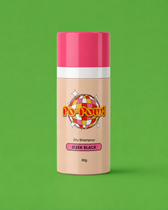
If you've made it this far into the dry shampoo aisle, you've probably noticed the newer arrivals: cans and jars labeled with shade names instead of just "dry shampoo." Tinted dry shampoo isn't a gimmick — it's a genuinely different approach to an old problem.
What makes it "tinted"
Traditional dry shampoo is white by default, because the starches and clays that absorb oil are naturally white or off-white. Tinted dry shampoo takes that same oil-absorbing base and adds pigment to it, so the powder itself is closer in color to your actual roots — brown, black, or blonde — instead of just white.
Do you actually need it?
It depends entirely on your hair color and how visible white residue is on you. A few honest guidelines:
- Light blonde: a standard white-based formula usually blends in fine. Tinted is a nice-to-have, not a necessity.
- Medium to dark blonde, or grey coverage at the root: tinted starts to matter more, especially at the hairline.
- Brown, black, or red: this is where tinted formulas make the biggest visible difference. A white-based formula will almost always show up against darker roots, no matter how well you brush it in.
How to pick your shade
Match to your root color, not your ends — root color is usually darker and is exactly where you're applying the product. If you're between two shades, size down to the darker option; it's easier to brush out a slightly-too-dark powder than to cover up a too-light one.
The goal isn't a different product for the sake of it — it's a formula that disappears into your actual hair instead of sitting on top of it.